Walter Peterson
Cryptocurrency shiba inu
Haliey Welch, known as “Hawk Tuah Girl” after last summer’s viral video, is sharing new details about the aftermath of her recent cryptocurrency scandal, as seen in footage exclusive to The Hollywood Reporter quickspin demo.
$HAWK launched on December 4 at 5 pm EST. According to analysis from TRM Labs, it had an initial market capitalization of $490. Within a matter of hours, the value plummeted by 91% and the market cap dropped to $41.7 million. About 10 days later, the value of the token was essentially zero.
The official synopsis for the series reads: “When bad behaviour nukes hotshot QB Russ Holliday’s (Powell) college career, he disguises himself and walks onto a struggling Southern football team as the talented, affable Chad Powers”.
Welch said her grandmother called her in distress after the agents arrived unannounced. She met with them after and handed over her phone. She explained, “They interrogated me, asking me questions and everything else related to crypto”.
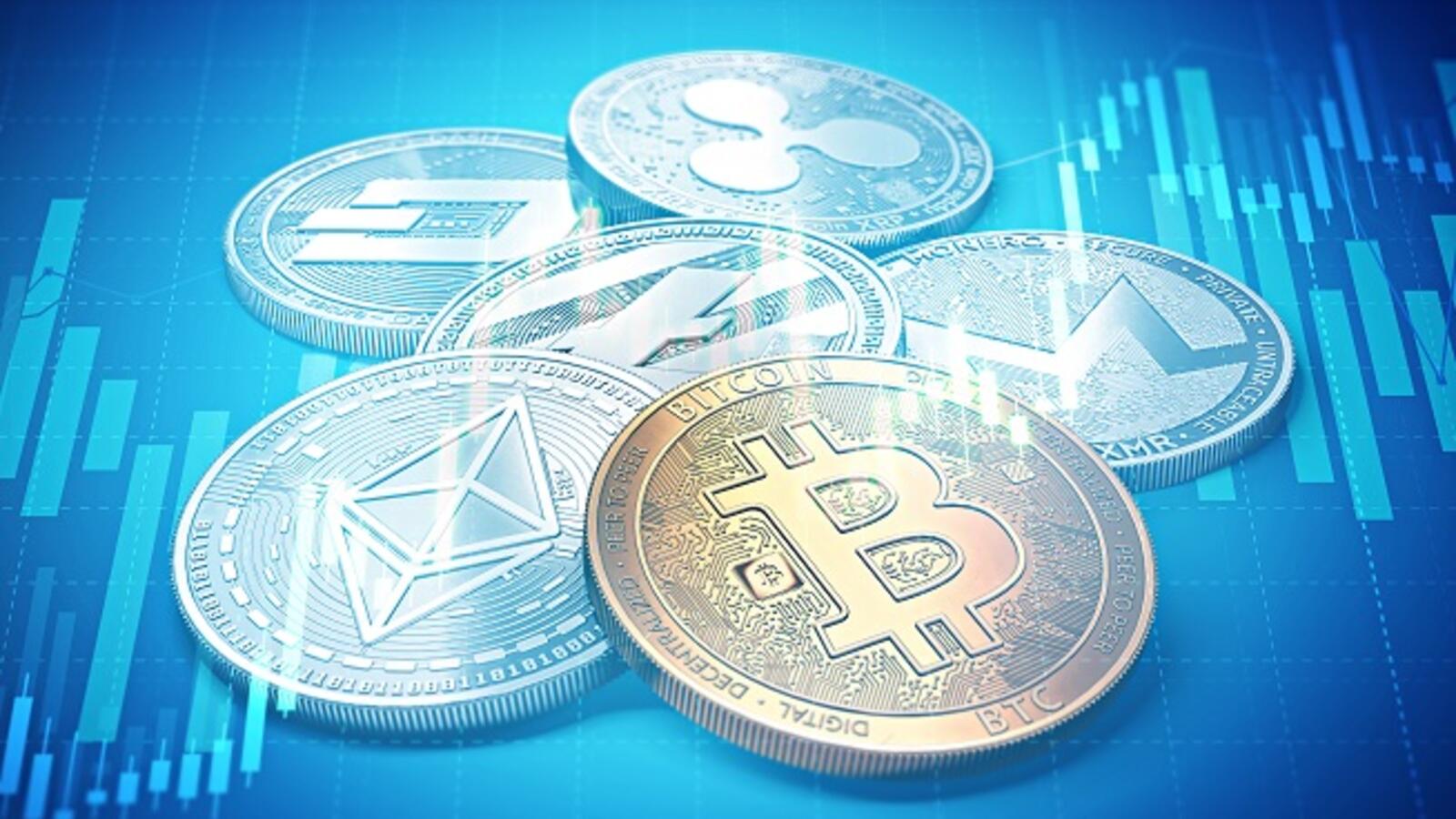
Cryptocurrency prices
A cryptocurrency wouldn’t be very useful if anyone could just change the history of transactions to their own liking – the point of cryptocurrency is that you can be sure that your coins belong to you only and that your balances will not change arbitrarily. This is why reaching consensus is of utmost importance. In Bitcoin, miners use their computer hardware to solve resource-intensive mathematical problems. The miner that reaches the correct solution first gets to add the next block to the Bitcoin blockchain, and receives a BTC reward in return.
Cryptocurrency exchanges provide markets where cryptocurrencies are bought and sold 24/7. Depending on the exchange, cryptocurrencies can be traded against other cryptocurrencies (for example BTC/ETH) or against fiat currencies like USD or EUR (for example BTC/USD). On exchanges, traders submit orders that specify either the highest price at which they’re willing to buy the cryptocurrency, or the lowest price at which they’re willing to sell. These market dynamics ultimately determine the current price of any given cryptocurrency.
Each of our coin data pages has a graph that shows both the current and historic price information for the coin or token. Normally, the graph starts at the launch of the asset, but it is possible to select specific to and from dates to customize the chart to your own needs. These charts and their information are free to visitors of our website. The most experienced and professional traders often choose to use the best crypto API on the market. Our API enables millions of calls to track current prices and to also investigate historic prices and is used by some of the largest crypto exchanges and financial institutions in the world. CoinMarketCap also provides data about the most successful traders for you to monitor. We also provide data about the latest trending cryptos and trending DEX pairs.

A cryptocurrency wouldn’t be very useful if anyone could just change the history of transactions to their own liking – the point of cryptocurrency is that you can be sure that your coins belong to you only and that your balances will not change arbitrarily. This is why reaching consensus is of utmost importance. In Bitcoin, miners use their computer hardware to solve resource-intensive mathematical problems. The miner that reaches the correct solution first gets to add the next block to the Bitcoin blockchain, and receives a BTC reward in return.
Cryptocurrency exchanges provide markets where cryptocurrencies are bought and sold 24/7. Depending on the exchange, cryptocurrencies can be traded against other cryptocurrencies (for example BTC/ETH) or against fiat currencies like USD or EUR (for example BTC/USD). On exchanges, traders submit orders that specify either the highest price at which they’re willing to buy the cryptocurrency, or the lowest price at which they’re willing to sell. These market dynamics ultimately determine the current price of any given cryptocurrency.
Cryptocurrency bitcoin price
Bitcoin introduced a type of currency (called cryptocurrency) that can be created and tracked on a public ledger (called blockchain), and which is not controlled by any central authority like a company or a country. Unlike with traditional currencies, everyone who can contribute the computational power needed to maintain this network will keep a record of every single Bitcoin transaction. In return, these participants will be able to gain Bitcoin by mining, which is the process of validating transactions being added to the ledger by solving complex puzzles. This is called the proof of work (PoW) consensus algorithm.
The original reward of 50 BTC per mined block as of the genesis block has been halved several times to 25, 12.5, and, as of 11 May 2020, to 6.25 BTC. The Bitcoin protocol dictates that these Halvings take place every 210,000 blocks. Once the limit of 21 million BTC is reached, miners will no longer receive block rewards, but they will still receive transaction fees.
These new blocks are formed by a new group of transactions that are accepted by the nodes of the Bitcoin network, added to the network, and then published to all nodes. Rather than requiring central approval and oversight, a majority of computers on the network instead hold sway. Thus making Bitcoin decentralized.
Defenders of Bitcoin also point to the carbon footprint of gold, which is considered by some to be a similar asset class to BTC, being double that of Bitcoin’s. The global banking sector is estimated to have a similarly large carbon footprint, and quantifying that of the financial services industry as a whole has not yet been managed.